
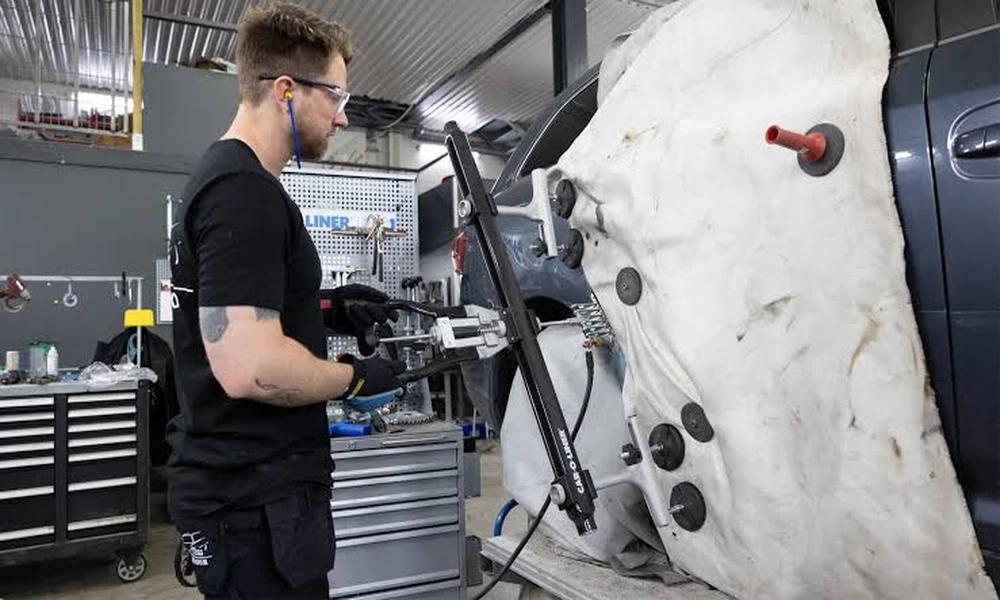
A dent can distort a panel without damaging its finish. Paintless dent repair works from that principle, correcting metal movement beneath intact paint. dent repair at Mike Calvert Collision uses this approach to preserve factory coatings while restoring panel contours. The process depends on controlled pressure, accurate access, and careful assessment. Each step targets the damaged metal rather than covering evidence with filler or repainting. As a result, suitable dents can regain their original shape while retaining the existing finish.
Precision reshapes metal beneath factory paint
Paintless dent repair starts with assessing the impact. Technicians inspect depth, location, paint condition, and access. Specialized rods then reach the panel’s underside. Controlled pressure gradually moves displaced metal toward its original contour.
The process avoids sanding, filling, and repainting. That distinction matters when factory paint remains intact.
Why does access matter during dent correction?
Access determines how precisely pressure can reach damage. Technicians may work through existing openings or remove trim carefully.
-
Rods apply measured pressure from behind.
-
Specialized tools reach difficult panel areas.
-
Lighting reveals subtle surface distortions.
-
Gradual adjustments prevent unnecessary metal movement.
Accurate access gives technicians better control over each correction.
Original paint remains part of the repair
Factory-applied paint has characteristics difficult to replicate perfectly. Its texture, thickness, curing process, and color variation develop during vehicle production.
Mike Calvert Collisio can preserve that original coating when panel damage permits paintless correction. Keeping factory paint also avoids introducing new paint edges, blending zones, or refinishing differences across adjacent surfaces.
Which dents suit paintless repair best?
Small and moderate dents often provide strong candidates. A shallow door ding, parking-lot crease, or rounded impact may respond well when paint remains undamaged.
-
Shallow damage allows controlled reshaping.
-
Flexible metal responds well to gradual pressure.
-
Intact paint supports successful correction.
-
Accessible panel areas simplify tool placement.
Sharp creases or stretched metal can require different repair methods.
Controlled pressure restores the panel contour
Technicians do not simply push the dent outward. Instead, pressure follows the panel’s original geometry. Specialized lighting exposes highs, lows, and remaining distortions during correction.
Progress happens through small adjustments. Each movement reduces tension without creating new irregularities. This measured approach helps preserve both panel shape and surface finish.
Factory finish can remain the final finish
Paintless repair offers a different repair philosophy. Instead of replacing a damaged appearance, the process restores the existing structure beneath an intact coating.
A useful example is a door ding with unbroken paint. Once corrected, the original finish remains on the vehicle. The repair therefore preserves more than appearance; it retains part of the vehicle’s manufacturing history.
FAQs
Can every dent receive paintless repair?
No. Severe creases, torn paint, or stretched metal may require conventional methods.
Does paintless repair involve repainting?
No. The technique reshapes suitable metal while preserving intact factory paint.
Can small creases be corrected?
Yes, provided the metal and coating remain suitable for controlled reshaping.
Will the repaired area remain visible?
Proper correction can restore a smooth contour with minimal visual evidence.